

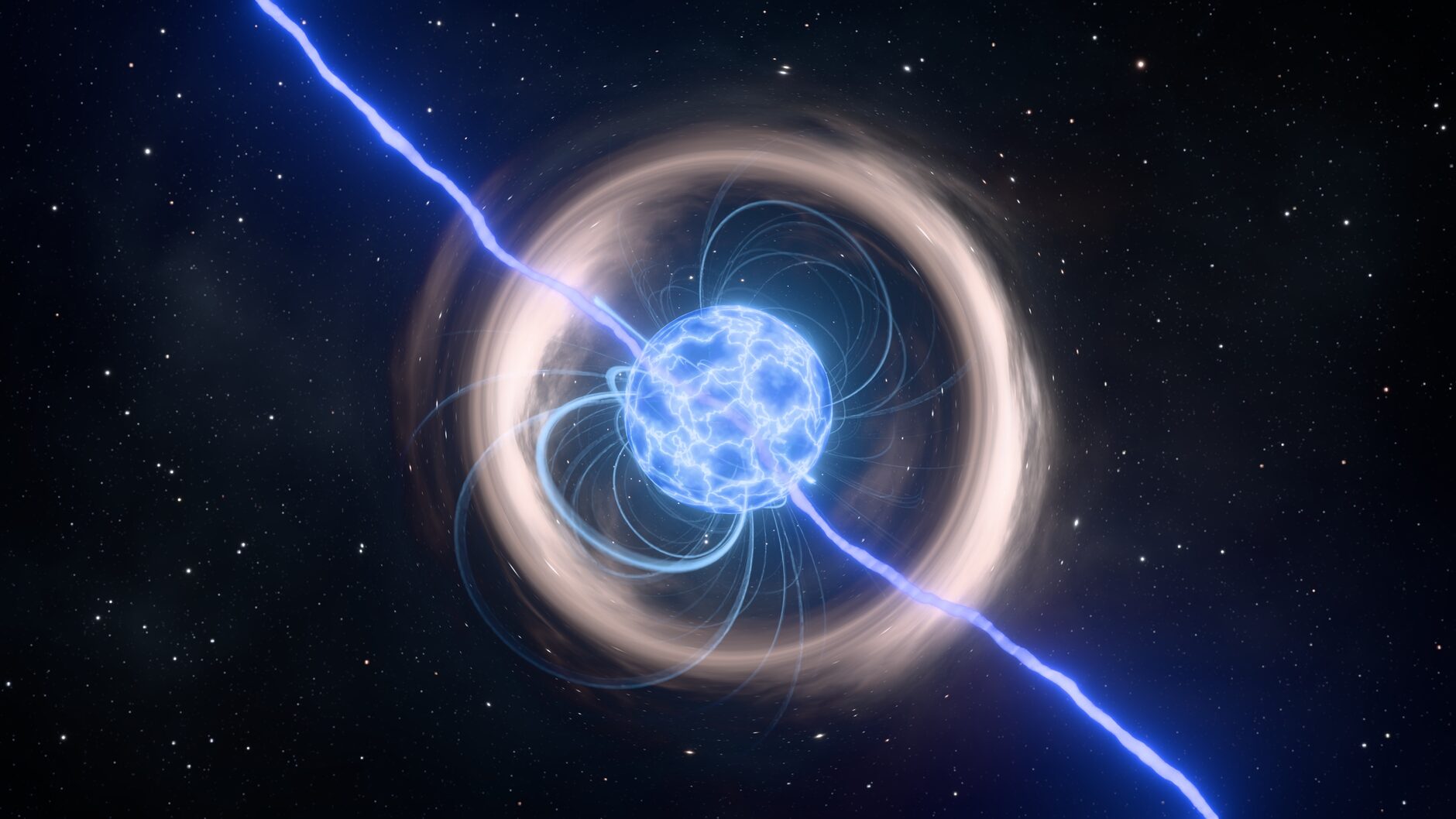
High-density nuclear matter is being researched to mimic conditions of the early universe. This groundbreaking study aims to unlock the mysteries of cosmic evolution and fundamental physics.
What is High-Density Nuclear Matter?
High-density nuclear matter refers to a state of matter where nuclear particles, such as protons and neutrons, are packed closely together, resulting in extreme conditions similar to those found in the core of neutron stars or during the early moments of the universe. This unique state is characterized by its dense composition and the strong interactions between particles, which can lead to fascinating physical phenomena.
The study of high-density nuclear matter is crucial for understanding fundamental questions about the universe, including the behavior of matter under extreme conditions and the formation of celestial bodies. Researchers believe that by recreating these conditions in laboratory settings, they can gain insights into the early universe’s evolution and the forces that govern it.
Key areas of interest in this field include:
- Nuclear interactions: Understanding how particles behave and interact at high densities.
- Equation of state: Determining how matter responds to changes in pressure and temperature.
- Astrophysical implications: Exploring how high-density nuclear matter influences the life cycle of stars and the formation of black holes.
Ultimately, unraveling the mysteries of high-density nuclear matter could provide essential clues to the universe’s origins and its ultimate fate.
The Importance of Early Universe Studies
Understanding the early universe is crucial for unlocking the mysteries of high-density nuclear matter and its role in cosmic evolution. Researchers believe that studying this extreme state of matter can provide insights into the fundamental forces that shaped our universe shortly after the Big Bang.
The significance of early universe studies lies in several key areas:
- Formation of Fundamental Particles: High-density nuclear matter could reveal how protons, neutrons, and other particles formed in the early moments of creation.
- Behavior of Strong Forces: Investigating how nuclear matter behaves under extreme conditions helps scientists understand the strong nuclear force that binds atomic nuclei together.
- Cosmic Structure Formation: Insights gained from these studies might explain the distribution of galaxies and the large-scale structure of the universe.
- Insights into Neutron Stars: High-density nuclear matter mimics the conditions found in neutron stars, providing a laboratory for studying their mysterious properties.
As researchers continue to explore high-density nuclear matter, they may uncover new physics that challenges our current understanding and expands our knowledge of the universe’s origins.
How Researchers Conduct Their Experiments
Researchers employ innovative techniques to investigate high-density nuclear matter, aiming to replicate conditions similar to those present in the early universe. One primary method involves using particle accelerators to collide heavy ions at incredibly high speeds. These collisions create extreme temperatures and densities, allowing scientists to observe the behavior of nuclear matter under conditions that mirror those just moments after the Big Bang.
During these experiments, researchers analyze the resulting particles and radiation emitted from the collisions. They utilize sophisticated detectors to capture data, which is then meticulously analyzed to extract insights about the properties of high-density nuclear matter. Key aspects of these experiments include:
- Beam Energy: Adjusting the energy levels of the particle beams to explore different phases of nuclear matter.
- Collision Types: Varying the types of ions used in collisions to understand the effects of different nuclear configurations.
- Data Simulation: Employing complex simulations to predict outcomes and enhance the interpretation of experimental results.
This comprehensive approach enables researchers to deepen their understanding of high-density nuclear matter and its role in the evolution of the universe.
Implications for Modern Physics
Recent developments in the study of high-density nuclear matter have profound implications for modern physics. Understanding this state of matter, which exists at extreme densities, can provide insights into the behavior of nuclear forces under conditions similar to those present in the early universe.
Researchers believe that high-density nuclear matter could unlock answers to fundamental questions about the universe’s formation and evolution. By recreating conditions akin to those just after the Big Bang, scientists can investigate the properties of matter at unprecedented levels of density and temperature. This research not only enhances our knowledge of nuclear physics but also intersects with cosmology and astrophysics.
The implications extend beyond theoretical physics; practical applications could emerge in various fields, including energy production and materials science. As experiments continue to probe this enigmatic state, the understanding of phenomena such as neutron stars, which are thought to contain high-density nuclear matter, becomes more refined.
- Enhanced understanding of fundamental forces
- Insights into neutron stars and their behavior
- Potential advancements in energy and materials
In essence, the exploration of high-density nuclear matter may pave the way for a deeper comprehension of the universe itself.
Future Directions in Quantum Research
As scientists continue to explore the properties of high-density nuclear matter, the future of quantum research looks promising. The intricate relationships between fundamental particles and their interactions are ripe for discovery, with potential breakthroughs on the horizon. Researchers are investigating several key areas that could deepen our understanding of the universe.
- Advanced Experimental Techniques: New technologies, such as particle accelerators and detectors, are being developed to simulate conditions similar to those of the early universe, providing insights into high-density nuclear matter.
- Theoretical Models: As experiments yield new data, theoretical physicists are refining models to better predict the behavior of matter under extreme conditions, paving the way for innovative theories.
- Interdisciplinary Collaborations: Partnerships between physicists, astronomers, and cosmologists are essential for integrating findings from different fields, enhancing the overall understanding of high-density nuclear matter.
- Applications Beyond Physics: The implications of this research extend into materials science and technology, potentially leading to advancements in various industries.
With these future directions, the quest to unravel the mysteries of high-density nuclear matter may ultimately illuminate the fabric of our universe.
Photo by Nicola Narracci on Pexels